Feeling Blocked? Try These Mental Tricks
Running marathons taught Dean Karnazes and I how to overcome creative roadblocks. Here's what you can do to stay motivated.


If it weren’t for running, I wouldn’t be as creative as I am today.
It’s mile sixteen of the New York City Marathon on a hot November day. As I stride across the Queensboro Bridge, something feels...off. I’m sweating profusely. Muscle cramps squeeze my calves, hamstrings, and quadriceps into a vice. My right forearm locks into a forty-five-degree angle. I look like the Tin Man trying to run a potato sack race.
Curse the weather gods for suckerpunching me with this heat. Did I just sweat all my electrolytes out?
The cramps worsen with each step forward. One thing becomes crystal clear: My personal goal of a time juuust a little bit faster than four hours and twenty-two minutes (my previous marathon time), has been blown to bits—thanks to these muscle cramps. I’m frozen in place.
As the other runners bolt past, I slow my mind and let my thoughts simmer. This isn’t a race against them. This is me against me. If I can overcome this obstacle, I can raise the bar for what I’m capable of.
This tenet provides my body with just enough of a trickle charge to trundle toward the finish line, clocking in at five hours and thirty-two minutes. Not the time I was aiming for, but a huge mental win for me. This reframing tool is known to psychologists as cognitive reappraisal, and it’s the key to my creative endurance.
Cognitive reappraisal is a technique used to reframe a negative situation into a positive one. A tool commonly used by therapists to help patients deal with stress and anxiety, it’s applicable to your career as a creative.
Whether you’re a designer, writer, photographer, or any other type of creative, your career is full of obstacles. Confusing feedback, tough clients, and slashed budgets are as fun as a cramp in your calf, and they sideline you from making something great. But with cognitive reappraisal, you can reframe those obstacles as creative opportunities. For example, if my budget is tight at Fast Company, I’ll save money by deploying a typographic solution instead of hiring an outside artist.
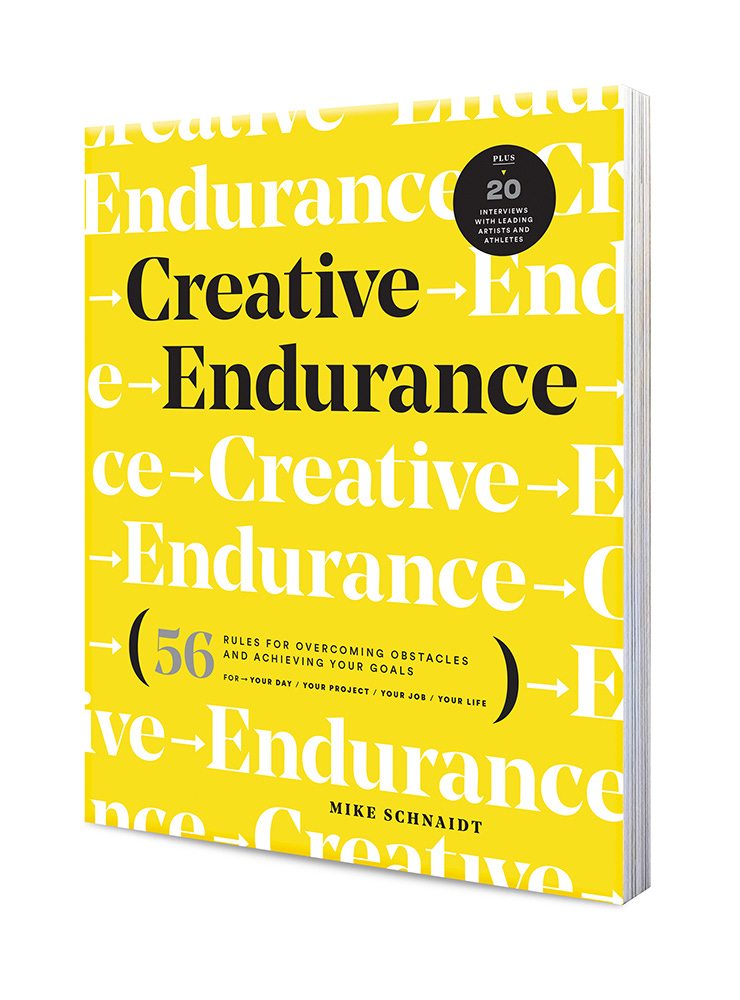
Creative Endurance will teach you how to reframe your problems and make better work as a result. Jot this down: A positive response to a problem will create a positive outcome.
Interested in reading more about Creative Endurance? Check out the hub page.

Start Moving, Keep Moving
Squeeze those bad jitters into good creative juice.
It’s rare for an ultramarathoner to be stuck in place, but that’s exactly where Dean Karnazes finds himself right now. Hovering over his butcher-block writing table, he struggles with the opening scene of his first screenplay. How can he make a film about ancient Greece feel relevant to a modern audience? The problem nags at Karnazes like a splinter jammed under his fingernail.
This scenario of creative paralysis may sound familiar, whether you’re struggling to get out of bed, stewing over a difficult project, or overwhelmed by a deadline. Remain still and your anxiety will continue to climb. The solution is simple: “Motion stirs emotion,” says Karnazes.
He puts his personal credo into action and embarks upon a head-clearing run. At the 2,600-foot (792 m) summit of Mount Tamalpais, the idea hits Karnazes like a rock rolling down the hill. The film will open with students griping about their first day of Greek Classics Studies. When the professor instructs them to open their books, the film will cut to a battle scene in Athens.
Karnazes returns to his desk to write the opening scene. “The hardest part is finding the inner discipline and motivation to do something that you’re not looking forward to,” he says.
In the first section of Creative Endurance, you’ll meet other heroes who use movement to overcome obstacles. Race car driver Hurley Haywood swiftly cuts through distractions, astronaut Jeanette Epps deliberately multitasks, and mountain biker Evelyn Dong knows when to stop moving at the end of the day.
Want to read another exclusive excerpt of Creative Endurance? Check out the hub page.